Cutting bank operation confirmation time to seconds via biometrics
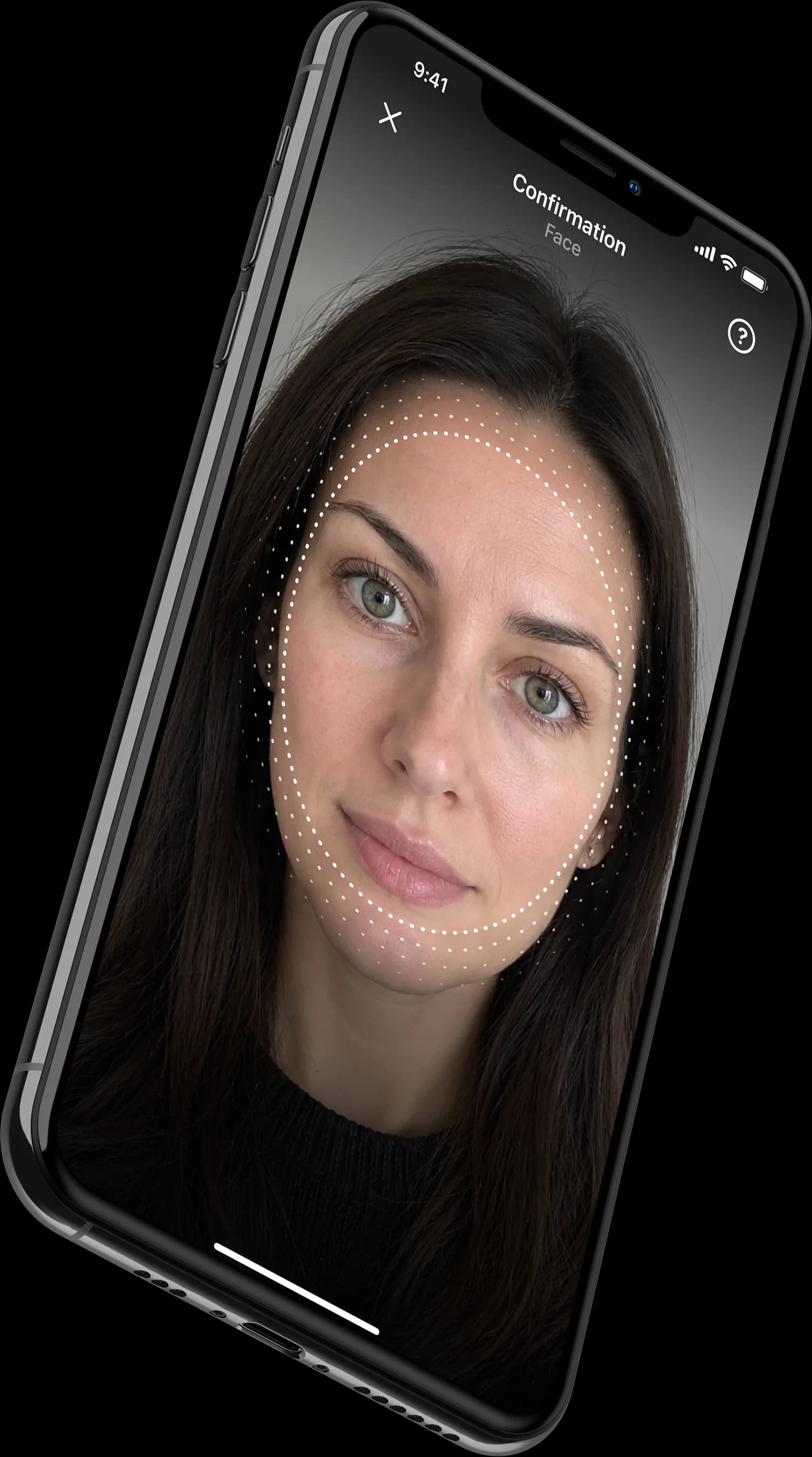
A government-led initiative required all Russian financial institutions to implement unified biometric identification. Sber serves a massive client base across the country, so this wasn't optional. It had to work smoothly for everyone, including older adults and users with disabilities.
Before this, compliance-flagged operations required users to call support and wait, sometimes up to 20 minutes, adding heavy load on the call center.
Over 90M clients
Tension
The initiative was mandated top-down, but the design decisions on how it worked, meaning the actual flows, fallback logic, and accessibility approach, were mine to define, checked against dev feasibility and legal/compliance constraints.
Challenge
How might we integrate face & voice ID into the existing security workflow so it feels effortless, without breaking habits for diverse user groups?
My role was leading the end-to-end design of the Face & Voice ID module — from the specific design approach through shipped flows, within a nationwide mandate that set the initiative itself.
Direction
Designed a face & voice ID flow triggered automatically for risky transactions, with a fallback to the old confirmation method when biometrics fail or aren't consented to.
MAU
8.5MEstimated annual cost reduction
$50MConfirmation time
Secs Hypotheses
If we let clients confirm risk-flagged/blocked operations via face and/or voice ID, we'd cut wait time from minutes to seconds, reduce call center load, improve customer experience, and maintain security.
Because biometric verification gives the compliance engine sufficient confidence.
Business & compliance mapping
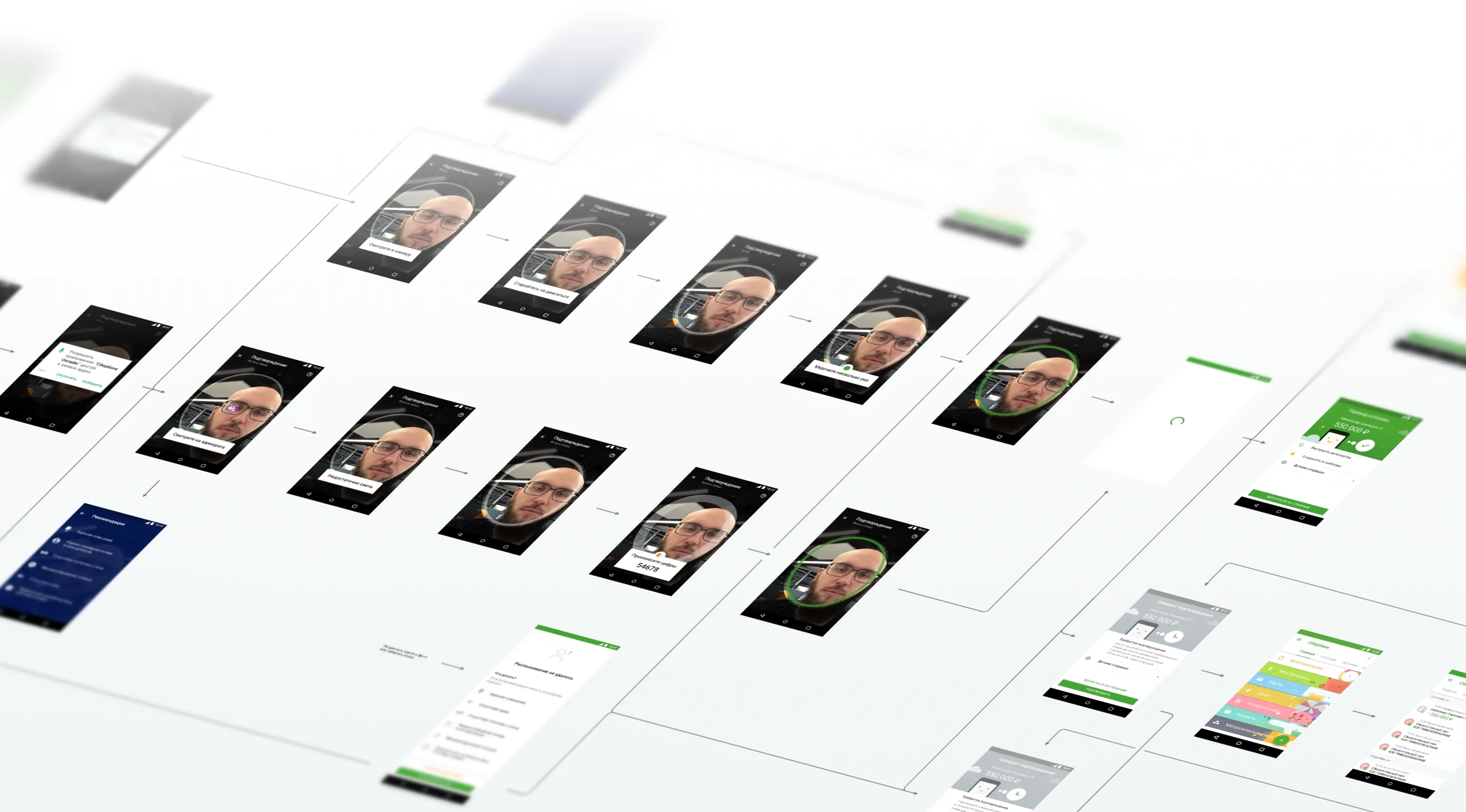
Worked closely with the tech lead and business analyst to map out the full decision logic — consent checks, camera access, positioning, liveness, template matching, and fallback branches — aligning technical constraints with business and compliance goals at each step.
Compliance logic itself was owned by an external risk engine — it evaluated transaction amount, destination, recipient, transfer history, and time, then decided which confirmation method was required: voice, face, or both. The ID module's job was narrower: run the check, return pass or fail.
Internal testing
After iterating in Figma and discussing details with the team, we built a working app and tested key points internally, simulating device-sensor interactions and library behavior.
- Multiple libraries within a business process flow
- UI feedback while recording
- Camera and mic permission collection
External testing
Next we tested the pre-production version with real bank customers.
All 8 participants were asked to complete a transfer using face ID confirmation. Everyone succeeded, no critical blockers, but testing surfaced friction spots that shaped later iterations.
- Users weren't sure the payment went through — needed clearer success confirmation
- Some on-screen prompts were unclear (e.g. "Motion detected")
- A few users doubted the method would still work if their appearance changed
Test task completion
100%Cross-team communication
Given the scale of the audience, getting this right mattered — invested heavily in communicating with stakeholders and the mobile design guild throughout, making sure decisions were reviewed and aligned before shipping to millions of users.


Trade-offs
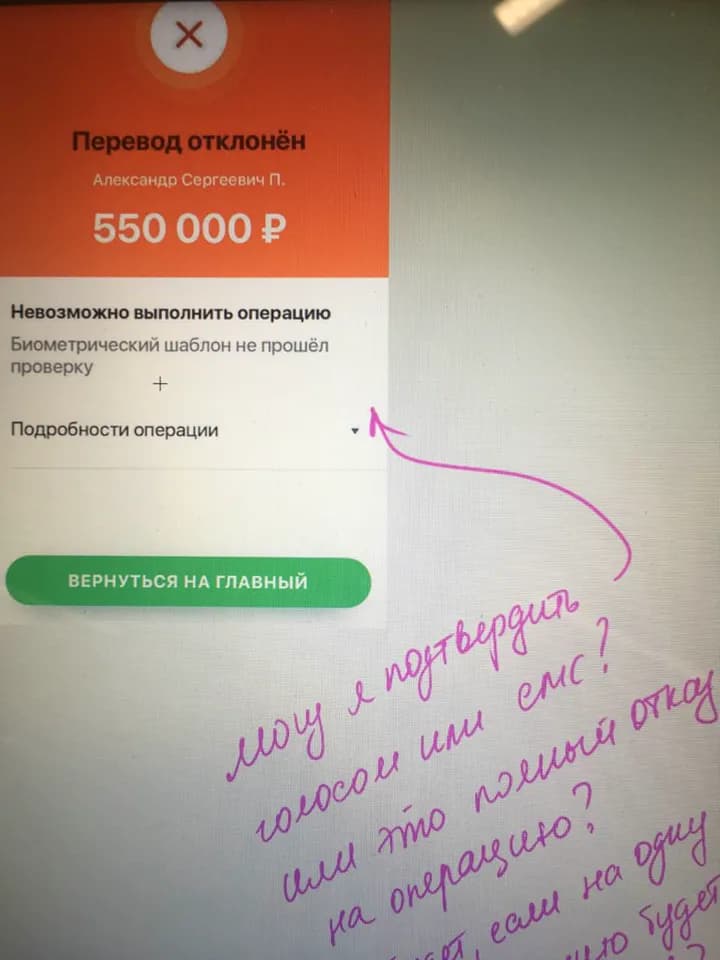
Users fall back to the old confirmation method via call center in the following cases
Biometric check fails after retries (bad lighting, noise, etc.)
User doesn't consent to biometrics
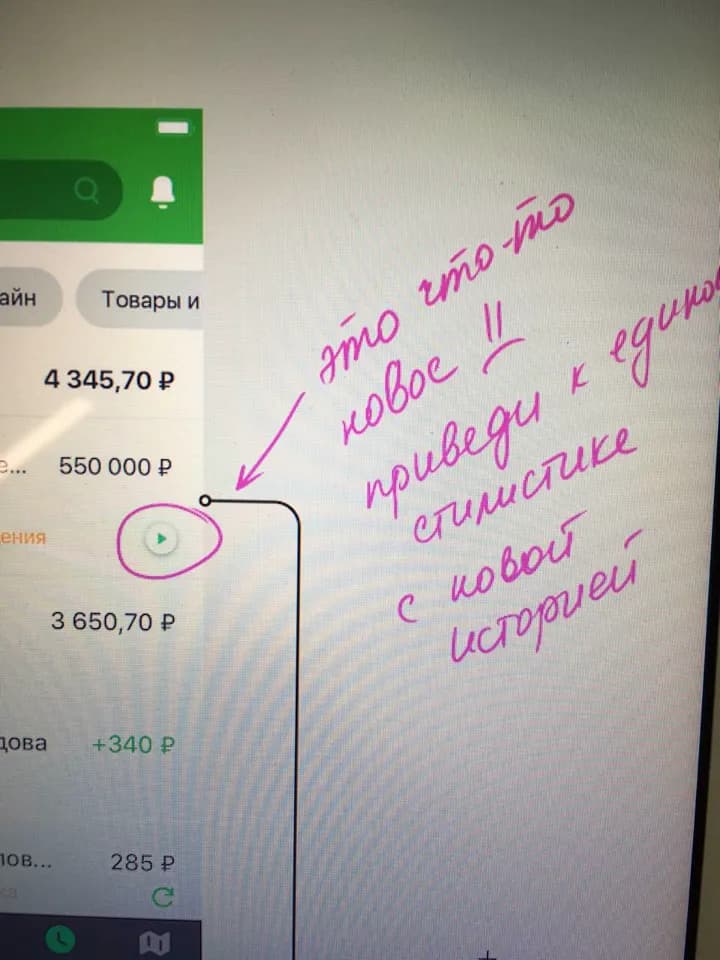
Design went through many rounds of iteration to get the UX right, partly working around limitations in the app's design system at the time.
Each round improved recognition accuracy and interaction speed: refined permission requests, camera guidance, liveness checks (blink detection), low-light error handling, and Voice ID digit prompts, and added animation/vibration feedback once the module confirmed key facial points (eyes, gaze, nose, mouth).
Face ID & Liveness
Camera opens, guides face alignment in real time, success state confirmed with animation/vibration.
Dynamic head-tracking flow required movement to prevent fraud — verbal/visual prompts balanced security with usability, capturing required data even if the user briefly looked away from instructions.
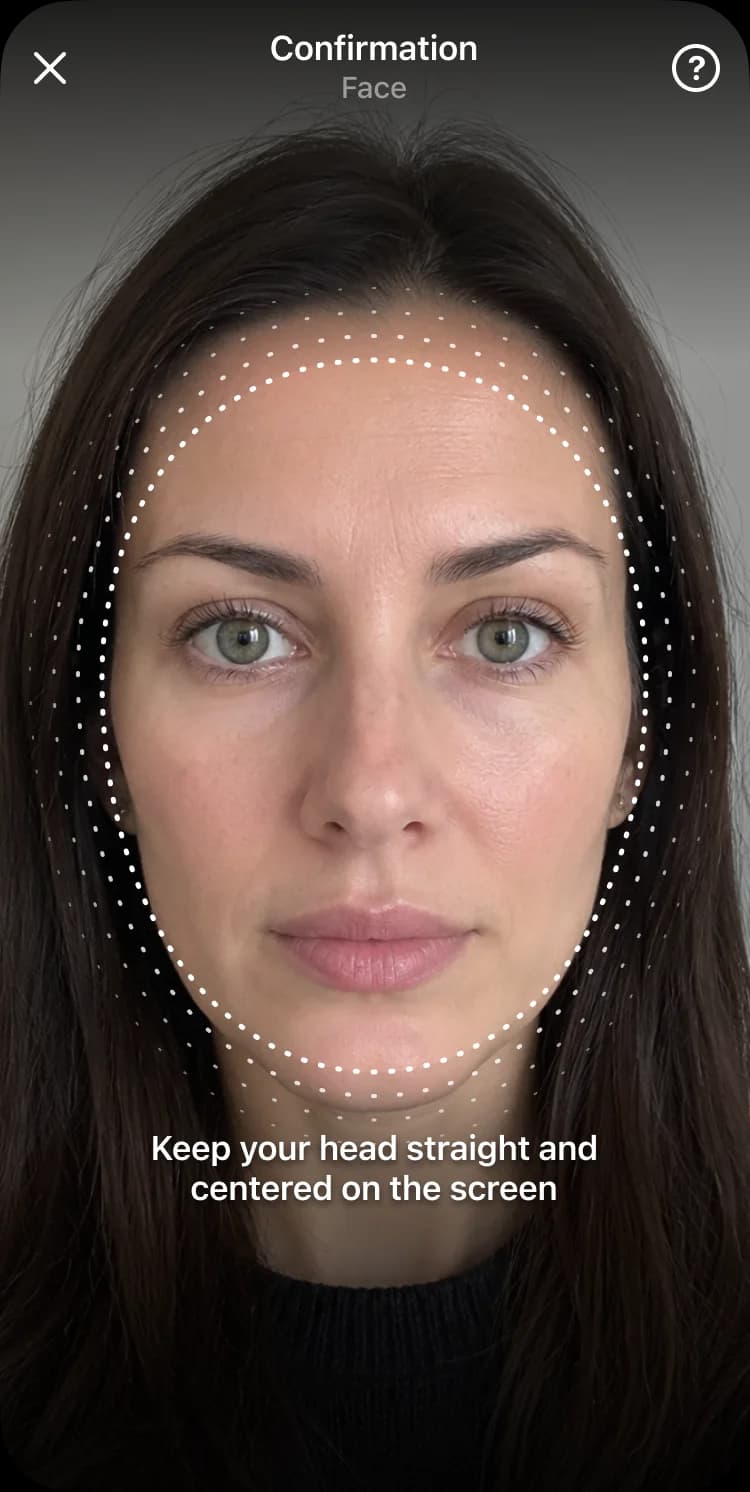
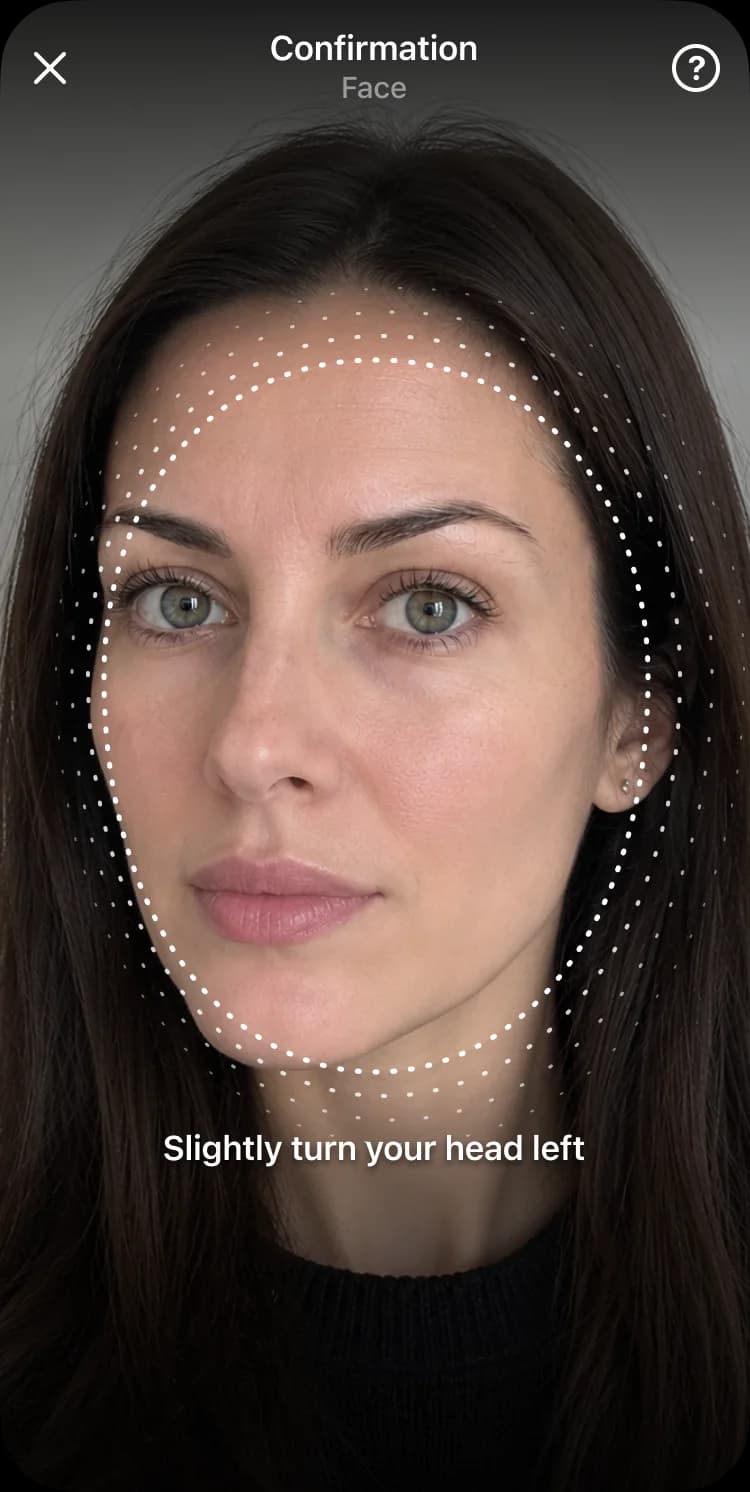
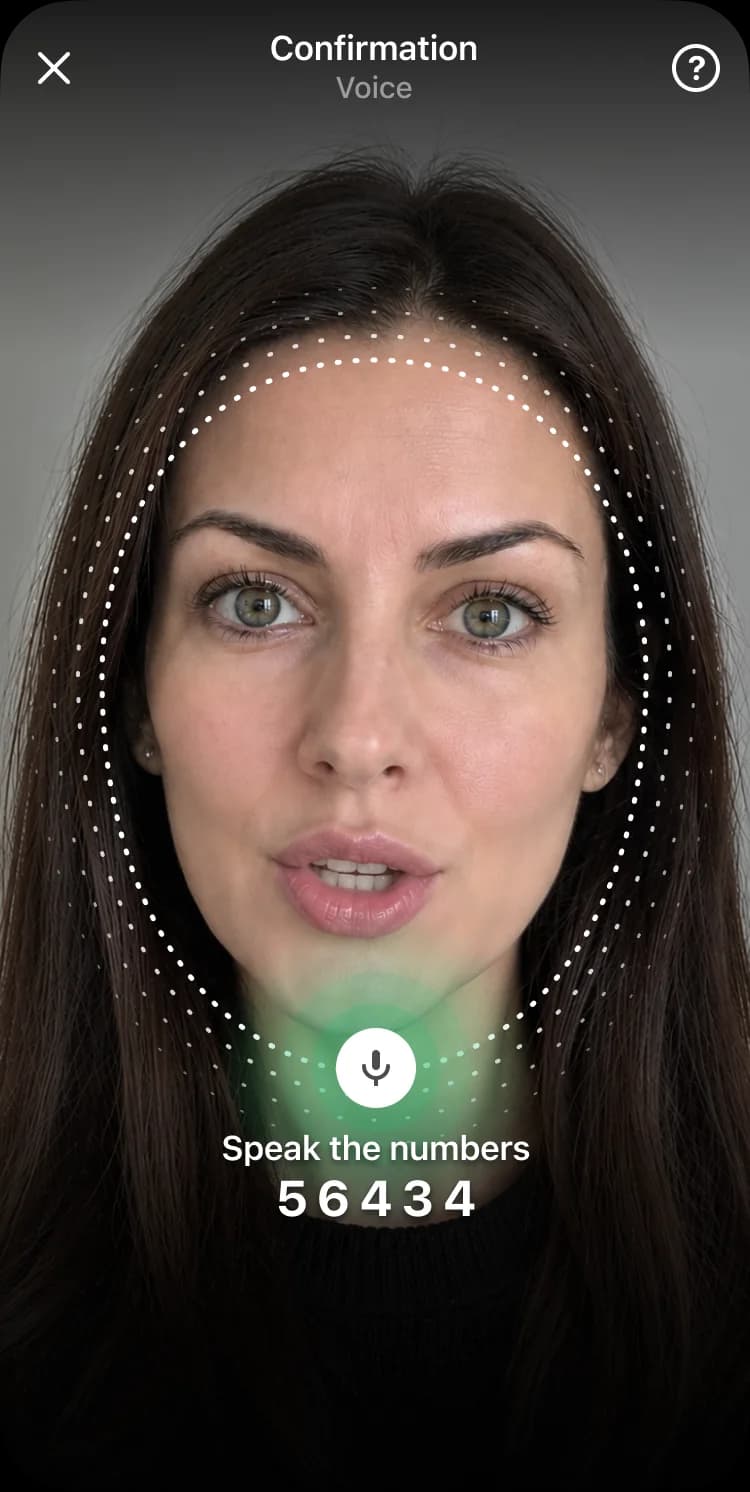
Voice ID
For high-value transactions, user speaks a set of digits. Pre-flight noise-check guidance helps users find a quiet spot; a dedicated error state detects ambient noise before the attempt fails, avoiding wasted tries.
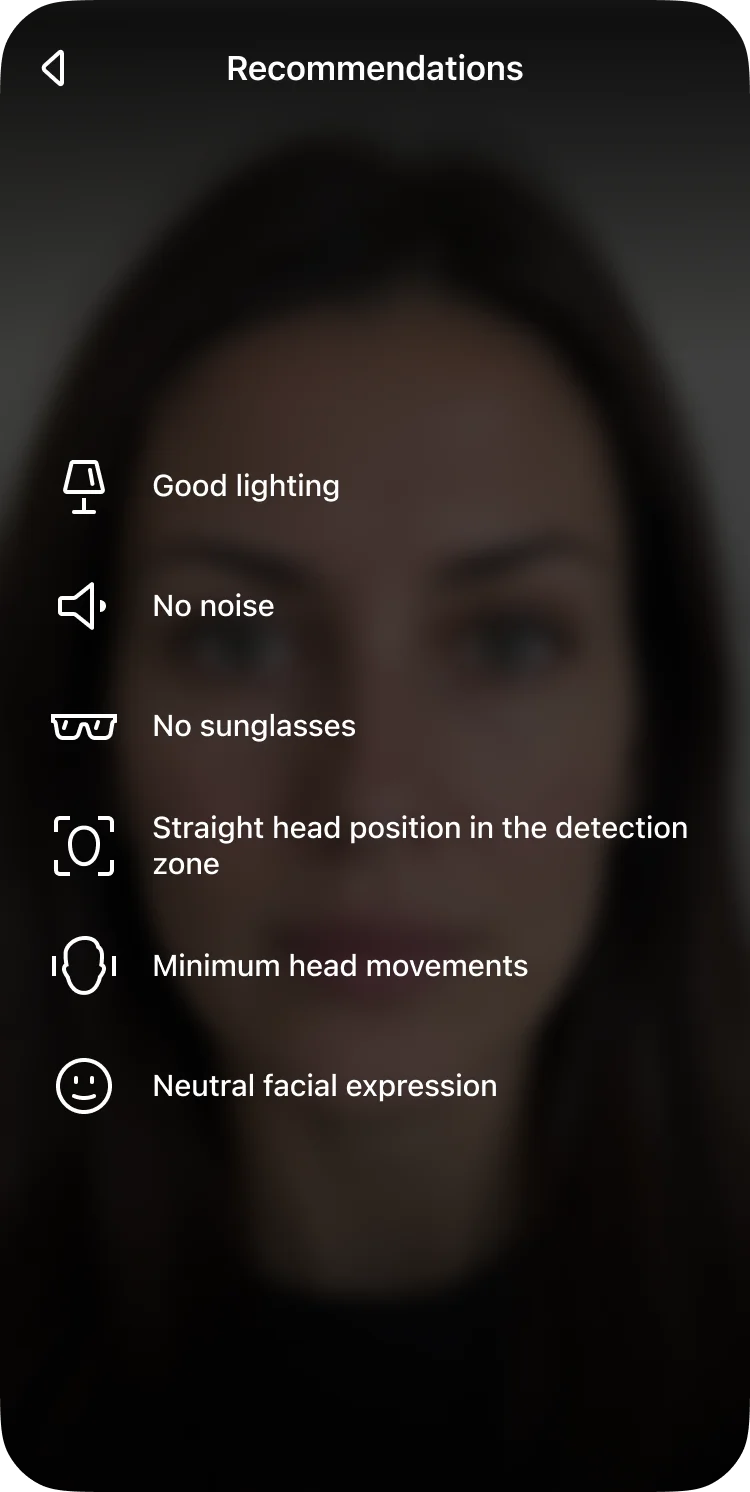
Guidance and fallback
The app helps users meet the right conditions. If recognition fails, it shows the reason and how to fix it. After a few tries, the user can confirm the operation in another way.

Attention to detail
Worked closely with developers to define the face-outline shape using Bezier curves, so it stayed smooth and scaled correctly across different screen sizes and device types. A small detail, but the kind of thing that mattered for a polished, reliable camera guide at this scale.
Shipped a face & voice ID module integrated into the existing security/compliance workflow, significantly reducing call center load and friction for customers.
MAU
8.5MEstimated annual cost reduction
$50MConfirmation time
Secs Reflection
With more time for iteration and testing, the UI could have gone further — some decisions were constrained by the app's design system at the time, requiring workarounds rather than ideal solutions.
Accessibility
The vibration-based "parking-aid" face-positioning guidance for vision-impaired users was designed and lightly tested, but deprioritized before full rollout.
Following the project
The same face and voice ID technology was adapted for an internal identification & onboarding tool for Sber office managers
Sber's Office Manager Tool case
Dmitrii focused particularly on customer experience by examining processes and driving improvements. His exceptional attention to details made the UX even better.
Alexander Vinikovetskiy
Product Owner
Product Owner
Team
UX/UI designer
Dmitrii Ziuzin
Product owner
Android developer
Artur
Business analyst
Timur Shapovalov
Tech lead
Askhat Bidzhiev
Design director
Design manager
Yulia Mikhailova